Brampton Commercial Hygiene
Your operation needs regular sanitation protocols tailored to unique hazards, processing volumes, allergen management, and inspection schedules, including verifiable documentation validating HACCP requirements, compliance audits, and health department standards. The information following give guidance on sanitation program requirements.
Main Points
- Sanitation specialists in Brampton support restaurants, grocery departments, commissaries, warehouses, bakeries, schools, mobile vendors, and allergen-sensitive operations.
- High-touch surfaces, food-contact equipment, kitchens, floors, drains, restrooms, and storage areas are sanitized using zone-based workflows to eliminate cross-contamination.
- Filing of finishing through checks, inspections, and correction logs verifies qualified contractors have verified approved sanitizer dilution, suitability, and exposure duration.
- Sanitation timelines need to adhere to risk, output capacity, format changes, accidents, and regulations, with everyday, periodic, and seasonal activities assigned by section.
- Focus on providers showing hazard analysis knowledge, public-health expertise, WHMIS training, insurance, endorsements, color-coded equipment, and audit-ready maintenance paperwork.
Brampton Venues That Need Food Safety Cleaning: Which Ones?
Any Brampton facility that handles, stores, prepares, packages, or serves food needs sanitation protocols. You must follow it if your facility falls under health department oversight, food regulations, or HACCP requirements. That requirement covers food service venues, employee cafes, supply centers, retail departments, meat shops, fish areas, local stores, and institutional food prep areas.
You also need documented food sanitation in storage facilities, food production centers, refrigerated locations, bakery retailers, school meal programs, event venues, and food distribution hubs. Temporary and mobile establishments count expert tips too, including food trucks, event vendors, and temporary booths. If your staff work with raw supplies, divide prepared foods, warm dishes, or organize allergen inventory, your facility needs written cleaning standards. In Brampton, cleanliness isn't elective; it's part of regulatory, business, and safety compliance.
What Do Brampton Cleaning Experts Clean?
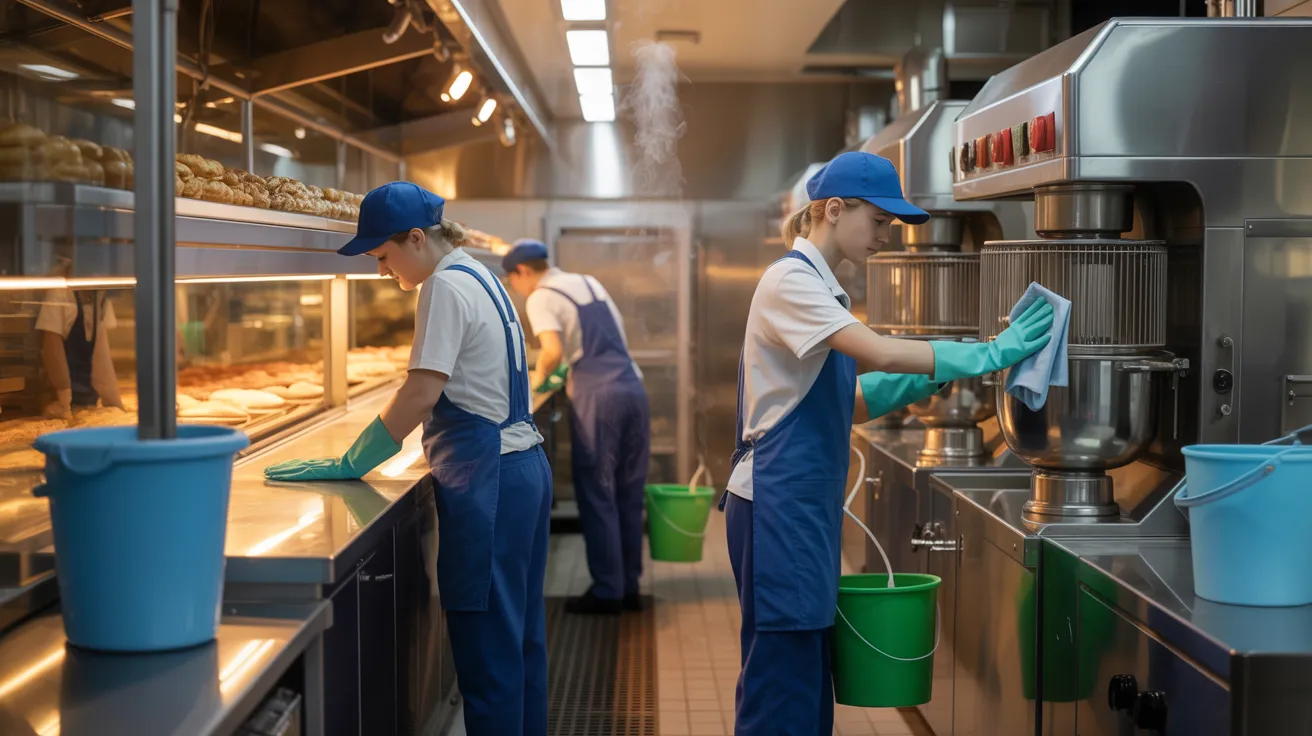
Your operation needs cleaning professionals who disinfect frequently contacted surfaces, cooking and food prep areas, all floor types, and restrooms to maintain food safety compliance and public health standards. These zones receive attention because they represent the most significant contamination risk, trip and slip dangers, and breaches of sanitation codes.
Understanding their cleaning procedures allows you to confirm your facility's cleaning meets required standards and regulations.
Sanitizing High-Touch Areas
base sanitization intervals determined by activity levels, infection risk, and how the space is used.
in cases where findings fall below target standards. They also eliminate cross-contact through rotating towels, following one-way workflows
Cooking Zones, Walking Surfaces, and Restroom Environments
Brampton cleaning services focus on kitchens, floors, and restrooms as each zone presents different food safety, accident, and public health risks. In industrial kitchens, you need grease removal from cooking stations, appliance surfaces, drain systems, preparation areas, and backsplashes to minimize contamination and pest pressure.
You should also expect documented floor care. is also provided as part of the service.
For restroom sanitation, cleaners sanitize touchpoints, fixtures, partitions, dispensers, and waste containers, then replace products and reduce odor. They also maintain restaurant cleaning supply rooms where product storage, sink cleanliness, and drain systems impact daily sanitation standards and worker protection.
The Importance of Food Safety Cleaning in Brampton
To comply with regulatory mandates and pass inspections, Brampton facilities must follow appropriate cleaning protocols. You also minimize bacterial spread through proper cleaning of food-preparation surfaces, appliances, and frequently-touched items. Most importantly, you help protect community wellness by reducing the chance of food poisoning in your establishment.
Sanitary Standards Adherence
Since Brampton food establishments must follow rigorous sanitary regulations, your hygiene maintenance directly influences your capacity to satisfy health codes, protect diners, and eliminate regulatory penalties. You must maintain sanitized food contact points, documented cleaning schedules, correct sanitizer application, and auditable operational standards that align with municipal and provincial inspection expectations.
Proper sanitation enables allergen reduction by minimizing residue on mutual appliances and high-touch areas.
Cross-Contamination Prevention
Maintaining regulatory compliance copyrights on your power to stop cross-contamination during everyday food preparation and sanitation. You need to partition uncooked items from finished dishes, sterilize work zones between assignments, and store chemicals away from food-contact items. Explicit protocols lower contamination threats and support consistent compliance during inspections.
Building allergen isolation prevents priority allergens from contacting shared surfaces, containers, or equipment. Utilize dedicated cutting boards, color-coded tools, and strict utensil labeling so team members won't blend products in cooking or serving.Mandate hand cleaning following uncooked meats, shellfish, egg items, or allergen substances. Swap wiping cloths regularly, and confirm disinfectant efficacy using test strips. When you train staff to follow these controls every shift, you foster a cleaner, more secure operation that meets Brampton's food safety expectations daily.
Public Health Protection
If food safety cleaning deteriorates, you don't merely face potential inspection issues—you boost the probability of foodborne illness affecting customers, staff, and the broader Brampton area. You also weaken your role in safeguarding community wellness, especially in high-traffic food premises where pathogens travel quickly through surfaces, equipment, and touchpoints.
You require cleaning protocols that remove contaminants, sanitize effectively, and validate outcomes. This requires following contact periods, selecting approved disinfectants, logging schedules, and educating staff to meet regulatory requirements. These controls promote illness spread by decreasing microbial counts before contaminating food or hands. Throughout Brampton, strong cleaning safeguards susceptible populations, reduces outbreak risk, and demonstrates accountability. When you adhere to standards, you exceed regulations—you mitigate risk and enable safer food service region-wide.
Why Is Cleaning Essential for Food Safety Compliance?
Following comprehensive cleaning schedules improves food safety compliance by minimizing contamination hazards, controlling pathogen growth, and ensuring your facility complies with sanitation requirements under HACCP-based programs and public health regulations. You confirm that food-contact surfaces stay visibly clean and microbiologically controlled, facilitating documented preventive controls and inspection readiness.
Diligent cleaning moreover strengthens allergen management by clearing residues that can provoke undeclared allergen exposure. When you combine approved sanitation protocols with regulatory training, your staff can implement uniform procedures, handle approved chemicals properly, update records correctly, and address variations prior to problems worsen. Regular cleaning promotes supply chain documentation, verifies corrective steps, and shows accountability when audited. Moreover, it supports you maintain product integrity, preserve regulatory compliance, and reduce the chances of regulatory actions, mass recalls, customer complaints, and unnecessary public health risks.
How Do You Plan Commercial Cleaning Work?
Plans for cleaning are most successful when developed based on risk, production volume, and regulatory requirements instead of just a set calendar.
monthly schedules for drains, ventilation systems, storage racks, and difficult-to-access areas, according to inspection data and sanitation documentation.
Finding Quality Brampton Cleaning Experts: A Guide
Evaluate providers first by food-safe sanitation requirements rather than cost. You must ensure each provider understands CFIA, public health, and HACCP-aligned expectations for your business. Request insurance proof, WHMIS compliance, staff training documentation, and supervision methods. Check technician awareness of cross-contamination risks, chemical handling, and documented sanitation practices.
You must also evaluate operational reliability and oversight. Seek references from food facilities in Brampton, then assess response speed, corrective processes, and communication quality. Ensure the company enables supplier checks and can provide inspection-compliant records when authorities or third parties demand verification. Verify equipment care, colour-coded tools are deployed correctly, and site-specific hazards are understood. A qualified provider protects compliance, product integrity, and your brand reputation.
Which components are part of a Food Safety Cleaning Plan?
Create a written plan that clearly outlines every sanitation duty, guideline, and expectation prior to beginning production. You should document cleaning frequencies, approved chemicals, dilution rates, contact times, tools, and verification methods for each area, section, and machine. Don't forget to add pre-operational inspections, corrective actions, and employee training requirements.
Your plan should also include cross-contamination controls, waste handling, pest-prevention measures, and documented schedules for bathrooms, drainage, ground surfaces, and food-handling zones. Specify how you'll distinguish raw from ready-to-eat operations, help with ingredient tracking, and maintain accurate allergen labeling through validated cleaning between product changes. You should establish accountability, preserve signed records, and check results against regulatory standards, HACCP controls, and customer requirements. When gaps appear, adjust procedures immediately and re-educate staff.
Popular Asked Questions
Do cleaning services work during nighttime hours at Brampton facilities?
Yes, you can book sanitation coverage to support overnight shifts in Brampton facilities. You'll organize overnight sanitation around operational windows, access requirements, and personnel needs. Services typically establish nighttime procedures to minimize disruption, maintain standards, and record finished tasks. You should verify response times, management, lockout protocols, and waste management before starting service.
Will sanitation professionals address emergency spills?
Yes, you can find many Brampton cleaning professionals offering emergency response options. They handle contamination, assess dangers, isolate zones, and execute rapid cleanup to reduce exposure and prevent disruption. You should confirm timeframes, certifications, protocols, and disposal methods. If your facility must meet standards, choose a service that documents incidents, maintains standards, and ensures verification.
Will environmentally safe disinfectants sanitize safely food preparation areas?
Yes, eco-friendly disinfectants can be suitable for surfaces contacting food if you pick disinfectants approved for food contact and complying with regulations. You should validate contact duration, concentration levels, and rinse protocols before deployment. Many natural-based solutions reduce harsh chemical exposure, but you must obtain evidence of effectiveness against harmful bacteria. To keep surfaces residue-free, you need to follow manufacturer directions precisely and confirm the sanitizer adheres to food industry regulations.
Do sanitation programs enable seasonal variations?
Yes, you can customize maintenance plans for seasonal variations. You should adjust frequencies, staff levels, cleaning agents, and verification steps to fit seasonal patterns while maintaining regulatory compliance. You'll lower equipment downtime by timing sanitization around line changes, peak seasons, and usage patterns. You should also update procedural documents, instruction programs, and environmental monitoring to account for transient threats, new allergens, or increased soil loads. Regular reviews preserve your strategy efficient.
Are professional cleaning companies offering staff training on hygiene protocols?
Certainly, professional cleaning experts coach your staff on hygiene protocols. You secure staff training on proper chemical use, processing times, contamination control, equipment disassembly, and documentation procedures. They generally coordinate instruction with HACCP, GMP, and CFIA or regional health bodies standards. Many also run health assessments to verify compliance, uncover shortcomings, and strengthen corrective measures. This helps you copyright standard processes, pass inspections, and reduce food safety risks daily.
Final Thoughts
Partnering with Brampton commercial cleaning and food safety experts means more than cleaning—it guarantees your operation stays inspection-compliant and your standards are defensible. From processing facilities to kitchens, each cleaned area and maintained corner reduces health hazards and prevents major expenses. By scheduling maintenance on appropriate schedules and executing a comprehensive cleaning strategy, you protect staff, clients, and your image. In a tightly controlled market, clean environments can't be overlooked—they're critical to business success.